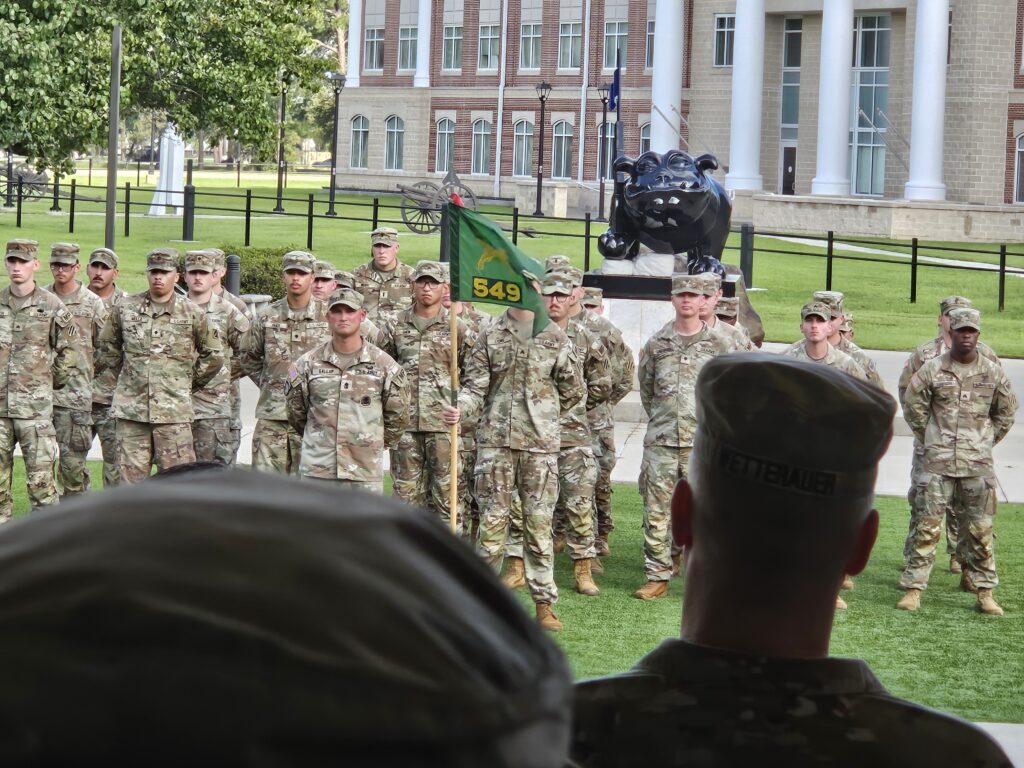
Last week, on July 15, I attended the 549th Military Police Company’s inactivation ceremony at Fort Stewart, Georgia — closing the book on a unit that first activated in Hawaii in 1945 and spent decades of its history stationed in the Panama Canal Zone. The ceremony was more than a passing interest to me. From 1974 to 1975, I served with the 549th at Coco Solo, in the Canal Zone, and for one year of my life that unit was the whole of my world.
Reading the ceremony program, I recognized the outline of a place that, like Camelot, faded into history. The 549th was reactivated in January 1947 as the 549th Military Police Company, Canal Zone, Republic of Panama, and it stayed there guarding the locks, the ports, and the jungle roads until the political ground under the Canal Zone itself began to shift.
I arrived in the middle of that long, quiet transition and served as an investigator. There was no treaty at that time, but it was being talked about under the Ford administration. It was close enough to feel the uncertainty of a command everyone knew, eventually, would not stay put.
Coco Solo in 1974 was heat, humidity, and many hours “crunching crime” in a part of America dropped into the middle of another country. It’s strange to think that the same unit patch then made its way, a quarter-century later, off a jungle base and onto Fort Stewart soil. The company relocated to Georgia in December 1998, just ahead of the final handover of the Canal to Panama the following year. What I knew as tropical duty became garrison duty in the Lowcountry.
I don’t recall ever hearing them called the “Tropic Enforcers” in my time — that name must have come later. Either way, they kept it even after the tropics were behind them.
The ceremony itself did the unit justice. The company history was read aloud, the colors were cased by the outgoing commander, CPT Robert Holland, and First Sergeant Brandon Gallup, and the formation closed out with the MP Regimental March, the Marne Song, and the Army Song.
Here again, I recognized the Army song, but that was about it for me. I was in the Army during the Vietnam era. America was going through a period of blaming itself for all the issues of the world and, in general, the esprit de corps was not as evident as it is today. Having said that; however, there was a closeness with the men in my unit. I guess we looked at ourselves more as law enforcement officers than as soldiers. We were soldiers and there was a sense of pride in serving our country, but there was also pride in being first class cops.
Fallen soldiers were remembered by name. That was just a stark reminder that the 549th’s story after my time there wasn’t just deployments to Bosnia, Iraq, and Afghanistan, but losses that came with them.
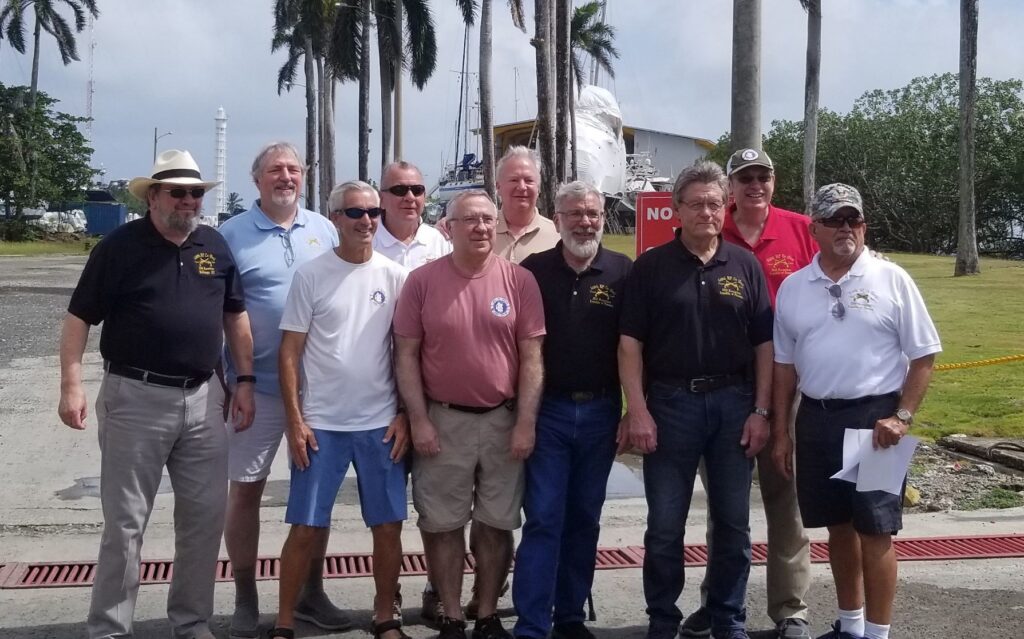
In 2020, several of us from the 549th got together for a special reunion in Panama. For most that was their first time back since they had served in the Canal Zone days (or as I put it BC – Before Carter). I’m glad that we got together again and had a chance to see what remains of some of our old stomping grounds from those days.
It’s a strange thing to watch a unit you served in decades ago get folded away for good. The 549th outlived the Canal Zone itself by a good twenty-seven years, and outlived my own year there by fifty. But for twelve months in the mid-1970s, this company was my job, my routine, and my introduction to what it meant to serve far from home. Seeing it stood down at Fort Stewart doesn’t feel like an ending exactly — more like watching a long thread finally get tied off, one that happened to run straight through a year of my own life. This isn’t the first time the 549th was deactivated. Who knows, I may see that banner flying again one day.