Shirley Green was a typical thirteen-year-old girl living in Americus, Georgia. She lived in the public housing during her childhood days, but she had a stable and comfortable living environment including — a father, a mother, five brothers, and one sister. Her parents worked hard to provide for the family and raised their children to value education and community service above almost everything else.
Shirley was the last person anyone would have picked out for trouble with the law. Even she never expected what would happen to her on that hot July day in 1963.
In 1963 Americus, Shirley lived under one set of laws while others lived under another. She used different bathrooms, drank from different water fountains, attended different schools, and entered public buildings and the Martin Theater through different doors. As you’ve probably figured out by now, Shirley is Black.
On a Saturday afternoon, Shirley’s parents had gone shopping into town. Shirley and her friend slipped away from their houses and walked to the Friendship Baptist Church, where organizers were holding a mass meeting to plan a protest to segregate the local theater in downtown.
After reaching the Church, they heard approximately 100 or more people singing uplifting hymns and also, listening to several pastors and other speakers. When the meeting ended, the group moved outside of the Church together to form a line to protest the black patrons’ entrance to the front door of the theater. Before, black patrons had used entrance to the Martin Theater through the back door of the theater. The plan was simple: instead of lining up at the “colored” entrance at the back, Shirley and other protesters would stand in line at the front door and attempting to buy tickets like anyone else.
Organizers passed out signs and gave all of the protesters strict instructions; No violence. No resistance. No speaking back to Police Officers. Continue singing uplifting hymns and stay together closely in line no matter what happened.
They were hoping to return back home before their parents got back from shopping. That didn’t happen.
As they were lined up at the front entrance of the theater to purchase tickets, Shirley noticed the woman in the ticket booth reach for the telephone. Shirley believes that call brought the police — to deal with a group of children and protesters who had broken no actual laws or crimes.
The police arrived and ordered the crowd to disperse. No one moved. Then a large transfer truck pulled up, and all of the protesters, including girls and boys were arrested and ordered to get inside truck that was provided by the Police Officers. Shirley and her friend climbed inside of the truck with the rest of protesters. When the back doors of the truck closed, the truck went pitch dark. It pulled away, and began a journey that would last sixty days.
The first stop was the jail in Dawson, Georgia, about a forty-five-minute drive from Americus. Shirley remembers men, women, and girls her own age all crowded into that truck together. No one was allowed to call home. As far as she knows, none of the girls’ parents were ever notified.
They were placed in a jail cell in Dawson for a few hours. Around 2:00 am in the morning, a smaller paddy wagon pulled up at the jail, and the girls were loaded inside the small truck again. Shirley expected the truck to turn back toward Americus. Instead, when it finally stopped, they were taken to another small location in Lee County, Georgia, an unknown country location in the middle of nowhere.
They had arrived at an old stockade in Lee County. What waited inside shocked them. Broken glass littered the floor, left by vandals who’d thrown rocks through the windows. Old, bloodstained blankets were piled in a corner — the closest thing to beds the girls would have was sleeping on the dirty and hard concrete floor. The toilet was clogged with feces and didn’t work. A showerhead dripped slowly and uselessly contaminated water; there wasn’t enough water pressure to rinse off or take a bathe, and what came out wasn’t safe to drink anyway. Spiders, roaches, mosquitoes and other bugs moved across the floor and their bodies every day and nights. There were no air conditioning and lighting systems. There were no toilet tissue, no soap, no bath cloths, and no sanitary supplies, so the girls used parts of their clothing and the paper their food came wrapped in.
Shirley didn’t expect to be held hostage in the Stockade a long time. Instead, they spent sixty days confined in that inhumane building through the worst of the hot summer heat. For the first few days, there was nothing to eat at all. Eventually, whoever ran the stockade began delivering four sandwiches to each girl.
Shirley’s parents were never told where she was. It isn’t hard to imagine what went through their minds when they came home from town that afternoon and found her gone.
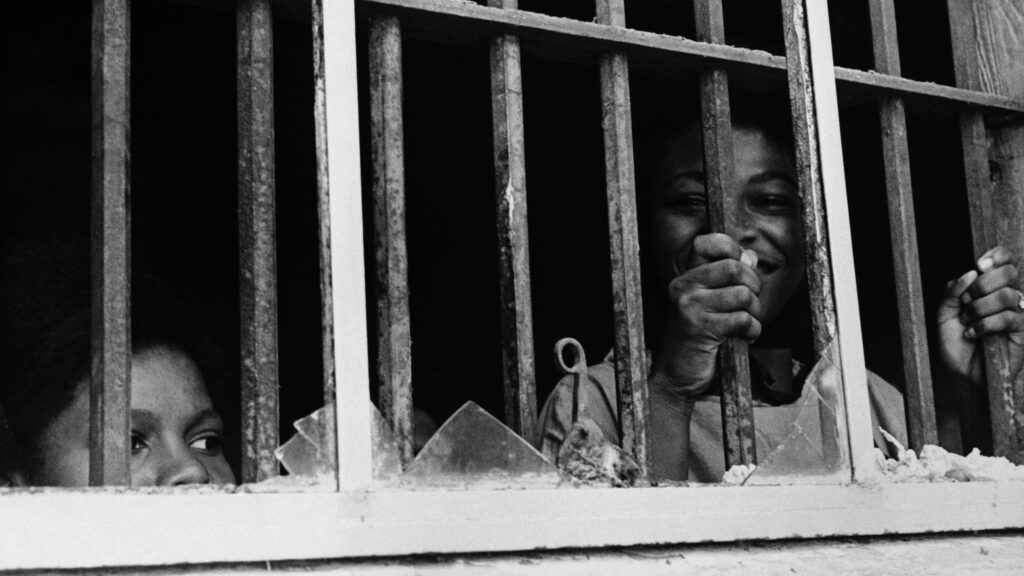
Weeks into their confinement, a young SNCC photographer named Danny Lyon slipped onto the stockade grounds after dark and photographed the girls through the broken, barred windows — about twenty images in all. Shirley remembers calling out to make sure he got her in the frame. The photos ran in newspapers and magazines across the country, and New Jersey Senator Harrison A. Williams entered them into the Congressional Record. Under that pressure, the girls were finally released to their families in September — after two months in custody, with no charges ever filed and no lawyer ever appointed to represent them.
Shirley went back to school having missed the first two weeks. No one mentioned her absence, and she didn’t talk about it either. But the toll was real. Her grades slipped. She grew depressed, and found her way out of it partly through cheerleading and dance.
One of her high school administrator told Shirley flatly that she would never go to college.
She went anyway. Shirley went on to earn her Doctor of Education in 2 years while building a career as an educator, scholar, documented researcher, and administrator, including serving on several local, state and national committees and organizations. Shirley later served her hometown as an Americus city councilwoman and a member of the Sumter County Election & Registration Board.
She holds no bitterness toward what happened to her. What she holds instead is a conviction that this true and hidden story belongs in the American historical records, and that it isn’t finished being told. She has asked me to help carry it forward, and together we are co-authoring a book about that summer — and about a life that, like Joseph’s in the book of Genesis, turned a season meant to break her into the foundation of something greater.
Authors Note: Shirley reviewed my original post and added some more detail to the account. Also, I recently sat down with Shirley, along with Dr. Jason Miller, Executive Director of SWEGA RESA and Billye Sands, Owner, CEO of bill_YAYfilms LLC. will be sharing videos from those conversations soon.